
"arabica spread"
3000 article(s) found
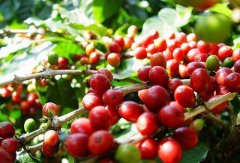
Mindanao, the second largest island in the southernmost part of the Philippines, produces high quality and high yield Arabica coffee.
Coffee was introduced into the Philippines (Philippines) in the early 19th century, and by 1880 the country had become the fourth largest coffee exporter in the world. However, due to the spread of coffee rust, the country became a coffee importer shortly after 1880. However, the coffee growing industry has gradually recovered. Today, after slow and steady development, the country's coffee industry continues to grow and develop quality.

The inheritance of coffee the spread and development of coffee beans
The world's first bag of coffee beans slowly left the African continent in the 6th century AD and developed for thousands of years. In 1530, the first coffee shop appeared in Damascus, north of the Ottoman Turkish Empire, and the word coffee appeared in British newspapers in 1601. For more than a thousand years, coffee trees have blossomed everywhere in the most livable land in the world, and finally formed major producing areas. At present

Kenya SL28 coffee varieties introduction Kenya SL28 coffee flavor? SL28 Coffee
SL28 is one of Africa's most famous and respected breeds. As a result, it initially spread from Kenya to other parts of Africa (especially in Arabica cultivation areas in Uganda, especially in Uganda, and especially in Latin America). This variety is suitable for middle and high altitudes and exhibits drought resistance, but is susceptible to major coffee diseases. SL28 is known for its simplicity-it's a

Compare Arabica with Robasta
Varieties and cultivation there are two main types of coffee grown today in the most important coffee-producing countries: Arabica coffee and Robasta coffee. Their grafting produces several seed varieties, and different varieties are represented by the names of the corresponding producing countries. Arabica coffee bean Arabica coffee is a precious variety. It has been planted and screened for centuries. It occupies the world.

Introduction to the characteristics of Indonesian Java Coffee Flavor and Flavor Manor
The history of Java coffee (java Java Coffee) the Dutch first introduced coffee to Central and South America in the 1820s. Coffee spread from the Dutch colonies to French Guiana and Brazil. In the process of colonization, the Dutch grew coffee in Malaba, India, and brought it to Bada in what is now Java, Indonesia, in 1699.

What's the taste of Arabica beans? Arabica or manning? I want all of them.
Professional coffee knowledge exchange more coffee bean information please follow the coffee workshop (Wechat official account cafe_style) front street-Arabica coffee varieties introduction Arabica coffee around the world, Arabica coffee belongs to the small fruit Arabica coffee is not native, mostly cultivated. As for how Arabica coffee spread to all parts of the world, it has not been discovered.

Indonesian Coffee Asian Coffee
Asian coffee is more full-bodied than Central and South American and African beans, but less sour, with a hint of heavy wood, herbs, spices and earth, and a deep, smoky aroma over an elevated acid aroma. At the end of the seventeenth century, the Dutch East India Company transplanted the Arabica tree (tibica) from India to Jakarta, Java. Due to the favorable climate and soil conditions, Arabica soon spread to Sumatra on Java Island.

The treatment of raw coffee beans Coffee trees bear fruit several times a year
The spread of coffee beans originated in Ethiopia, about 850 in the Christian era. It then spread throughout the Arabian Peninsula, and coffee was not really documented until the 900th year of the Christian era. At that time, the Yemenis carefully guarded the coffee in order to prohibit the outflow of coffee. However, some coffee saplings are smuggled to the Netherlands and planted in greenhouses. Coffee was not available in America until 1723.
Summary of coffee transmission path Arabica boutique black coffee
The transmission route of coffee is summarized from Ethiopia to Yemen (595-850), Yemen to India and Java (1600), Java to the Netherlands (1706), Netherlands to Paris (1714), Paris to Bourbon (1718) Martinique, Haiti (1723), Mexico, Brazil and other Central and South American countries (1727) and finally to East Africa (1900).

The origin characteristics of Canefra coffee beans and the relationship between Canefra and Robusta coffee beans
Professional coffee knowledge exchange more coffee bean information please follow the coffee workshop (Wechat official account cafe_style) Kanefra coffee beans, the relationship between Canefera and Robsta coffee beans, Carnefra has several first introduced coffee beans of the two major families, the ── Arabica family and the Canephora family. Canefra is commonly known as Rob.

Small fruit coffee small coffee is Arabica Arabica coffee beans? How much is the arabica coffee?
Professional coffee knowledge exchange more coffee bean information please pay attention to coffee workshop (Wechat official account cafe_style) small fruit coffee (scientific name: Coffea arabica), also known as Arabica coffee, Arabica coffee, is a species of Rubiaceae coffee, is the most traditional variety of coffee. Originally from East Africa, coffee was monopolized by the Arab world for a long time before the 15th century

Arabica beans turned out to be small fruit coffee? Arabica Coffee and Arabica Coffee
Professional coffee knowledge exchange More coffee bean information Please pay attention to coffee workshop (Weixin Official Accounts cafe_style) Small fruit coffee (scientific name: Coffea arabica), also known as Arabic coffee, Arabica coffee, is a species of Rubiaceae coffee genus, is the most traditional coffee variety. Originated in East Africa, coffee was monopolized by the Arab world for a long time before the 15th century AD
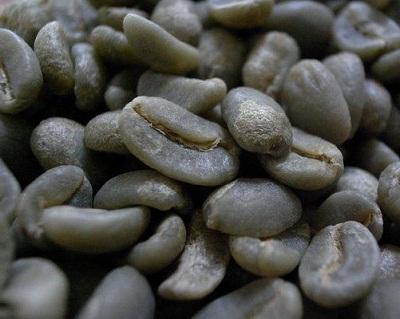
Is it Robusta or Arabica? Coffee bean variety Indonesian cat shit musk Kopi Luwak
Coffee has more than a hundred varieties of coffee, the more common coffee are: Arabica Arabica, outstanding personality, unique flavor, is the main force of boutique coffee, mainly used for coffee shop management and high-end coffee market supply; Robusta Robusta, rough flavor, high caffeine content, not boutique coffee, often used for instant coffee processing and Italian coffee mixed beans. Ethiopia Typi
Tiebikadi, Katie, pickup, iron pickup.
Typica (Typica) is the species name of coffee beans, and it is one of the oldest varieties of Arabica. Iron pickup, also known as the old variety of small-grain coffee, its yield is less, cultivation is difficult, so the price is much higher than ordinary small-grain coffee. Tibica coffee is native to Ethiopia.

How do Arabica coffee beans taste? is Arabica coffee black?
Professional coffee knowledge exchange more coffee bean information Please pay attention to coffee workshop (Wechat official account cafe_style) Coffee has a long history, until the third wave of coffee, people have the enthusiasm to explore every step of the production process of a cup of coffee: including how farmers plant, workers how to harvest, how to deal with coffee, how to target this coffee
How does Arabica coffee taste? Is Arabica coffee black?
Professional coffee knowledge exchange More coffee bean information Please pay attention to coffee workshop (Weixin Official Accounts cafe_style) Coffee has a long history of development. It is not until the third wave of coffee craze that we have the enthusiasm to explore every step of the production process of a cup of coffee: including how farmers plant, how workers harvest, how to process coffee, and how to make beans for this coffee.
Introduction of Coffee Tree species
Typica (Typica) is the species name of coffee beans, and it is one of the oldest varieties of Arabica. Iron pickup, also known as the old variety of small-grain coffee, its yield is less, cultivation is difficult, so the price is much higher than ordinary small-grain coffee. Tibica coffee is native to Ethiopia.

Introduction of Arabica Coffee in six Fine Coffee producing areas in Honduras
In Honduras, coffee-producing areas are divided into six major areas, spread to the west and south, namely Santa Barbara (Santa Barbara), El Paraiso (El Paraiso), Copan (Copan), La Paz (La Paz) and Comayagua (Olan Mound), with an average planting height of more than 1100 meters above sea level. The variety of coffee is Elaraby
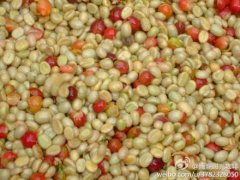
The Flavor of Fine Coffee from the basic knowledge of producing area
After coffee beans spread to all parts of the world, due to the different climate, soil quality, planting methods and processing methods, the taste of coffee beans can be said to be completely different. Here is a list of the basic flavor characteristics of Arabica coffee beans from different producing areas (it should be noted that the flavor of coffee produced by different producing areas and different farms in the same place will be different. Some coffee products are generally believed to be

Flavor characteristics of coffee from the producing area of high-quality coffee beans
After coffee beans spread to all parts of the world, due to the different climate, soil quality, planting methods and processing methods, the taste of coffee beans can be said to be completely different. Here is a list of the basic flavor characteristics of Arabica coffee beans from different producing areas (it should be noted that the flavor of coffee produced by different producing areas and different farms in the same place will be different. Some coffee products are generally believed to be